


















In This article
Every industry reaches an inflection point. I believe the quick-service restaurant industry is at one now.
Over the last decade, operators have invested heavily in digital ordering, loyalty programs, labor optimization, delivery, and point-of-sale technology. Those investments have transformed the guest experience and generated more operational data than ever before.
Yet many restaurant leaders are asking the same question: If we have more data than ever, why is operating the business becoming more difficult?
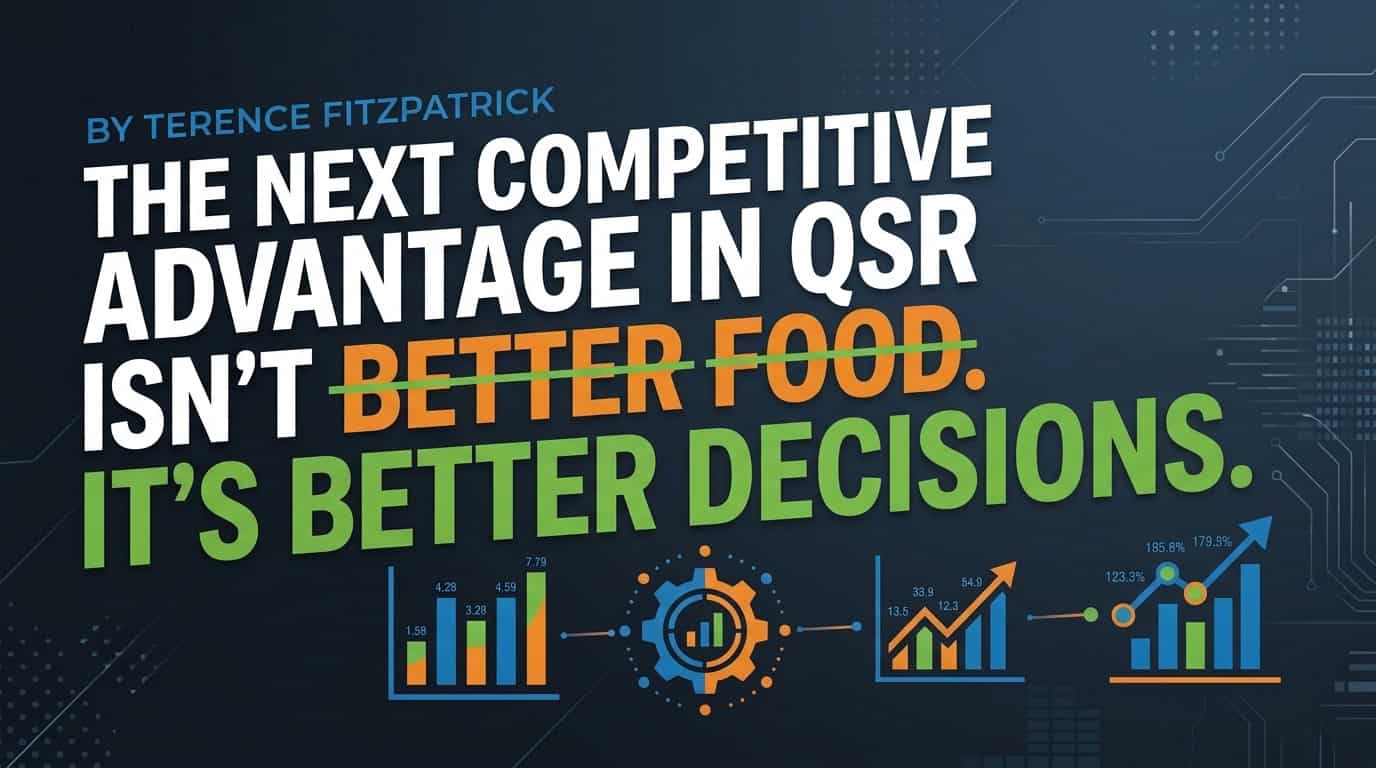
The answer is simple. Data alone isn’t a competitive advantage. The ability to make better decisions faster is.
Margins remain under pressure. Labor continues to be one of the industry’s greatest challenges. Guest expectations continue to rise, while technology stacks become increasingly complex. At the same time, operators are expected to deliver a consistent brand experience across hundreds or even thousands of locations.
That’s not simply a technology challenge. It’s an operational leadership challenge.
The New Competitive Advantage
For years, I’ve seen restaurant organizations rely on yesterday’s reports to manage today’s business. Sales, labor, food costs, and customer feedback remain essential metrics, but by the time those reports are reviewed, the opportunity to influence the outcome has often passed.
The organizations that will outperform over the next decade won’t necessarily be the ones with the most technology. They’ll be the ones that reduce the time between identifying an issue and taking an action. Whether it’s improving throughput, protecting margins, strengthening execution, or enhancing the guest experience, speed of decision-making is becoming one of the industry’s greatest competitive advantages.
This is where I believe artificial intelligence is often misunderstood. AI isn’t about replacing people. The best operators I’ve worked with don’t need another dashboard—they need better visibility into what’s happening across their business so they can focus their teams on the issues that matter most, as fast as possible. Great operations have always depended on great people. Technology should empower those people to make faster, more informed decisions, not replace them.
The Conversations Worth Having
That’s why I’m looking forward to attending QSR Evolution this September. While every conference showcases new products and technologies, the conversations I’m most interested in are the ones happening between sessions. How are brands scaling without adding unnecessary complexity? How are operators protecting margins while improving the guest experience? How are leaders leveraging AI to strengthen execution without overwhelming their teams?
Those are the discussions that will shape the future of our industry.
At DTiQ, we’re fortunate to work alongside many of the world’s leading restaurant brands, helping them transform operational data into actionable insights that improve execution, enhance the guest experience, and drive measurable business outcomes. Every engagement reinforces the same lesson: organizations that create a culture of operational intelligence consistently outperform those that rely solely on historical reporting.
Despite the challenges facing the industry, I’ve never been more optimistic about where QSR is headed. We have an opportunity to rethink how restaurants are managed, how teams are supported, and how decisions are made at scale. The brands that embrace that shift won’t simply operate more efficiently; they’ll build stronger cultures, deliver better guest experiences, and create lasting enterprise value.
Let’s Continue the Conversation at QSR Evolution
If you’re attending QSR Evolution, I’d welcome the opportunity to connect. Whether you’re exploring how AI can improve operational execution or simply interested in exchanging perspectives on where our industry is headed, stop by the DTiQ booth #415 or reach out to schedule time during the event (tfitzpatrick@dtiq.com). The best ideas rarely come from presentations; they come from meaningful conversations with leaders who are shaping the future of the industry.