




















Daiman Singh
VP of Sales and GM for APAC/ANZ
Connect on LinkedIn
The QSR industry is investing heavily in technology. In the past 10 years, operators have adopted digital solutions across guest and operational processes to enhance efficiency, visibility, decision-making, guest experience, and profitability.
This investment is accelerating. According to the National Restaurant Association, operators are investing in POS, workforce management, digital ordering, self-service technology, and AI, demonstrating technology’s deep integration in modern restaurant operations.
However, this evolution has introduced new challenges: fragmentation and complexity. Multiple vendors, each addressing different needs, are creating more platforms and more data, but unfortunately, they remain disconnected systems. Technology is meant to simplify operations, but it can instead add complexity for daily users.
This challenge is even more significant as AI becomes part of restaurant operations. According to Deloitte’s 2025 research, 82% of restaurant executives plan to increase AI investment, yet fewer than half feel prepared to adopt AI across technology infrastructure and operations.
This highlights a key distinction: investing in technology is only the first step. Building a connected data and operational environment is essential to realizing its full value.
I’ve experienced the evolution of QSR technology from multiple perspectives: as an in-store operator, as a QSR customer, and now as a technology partner working with global brands to deploy and scale technology worldwide. Despite differences in brands, markets and operating models, many of the same fundamental challenges persist across the industry.

Too much data, too many systems, and insufficient integration don’t help.
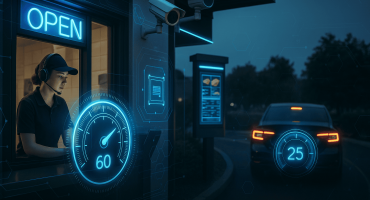
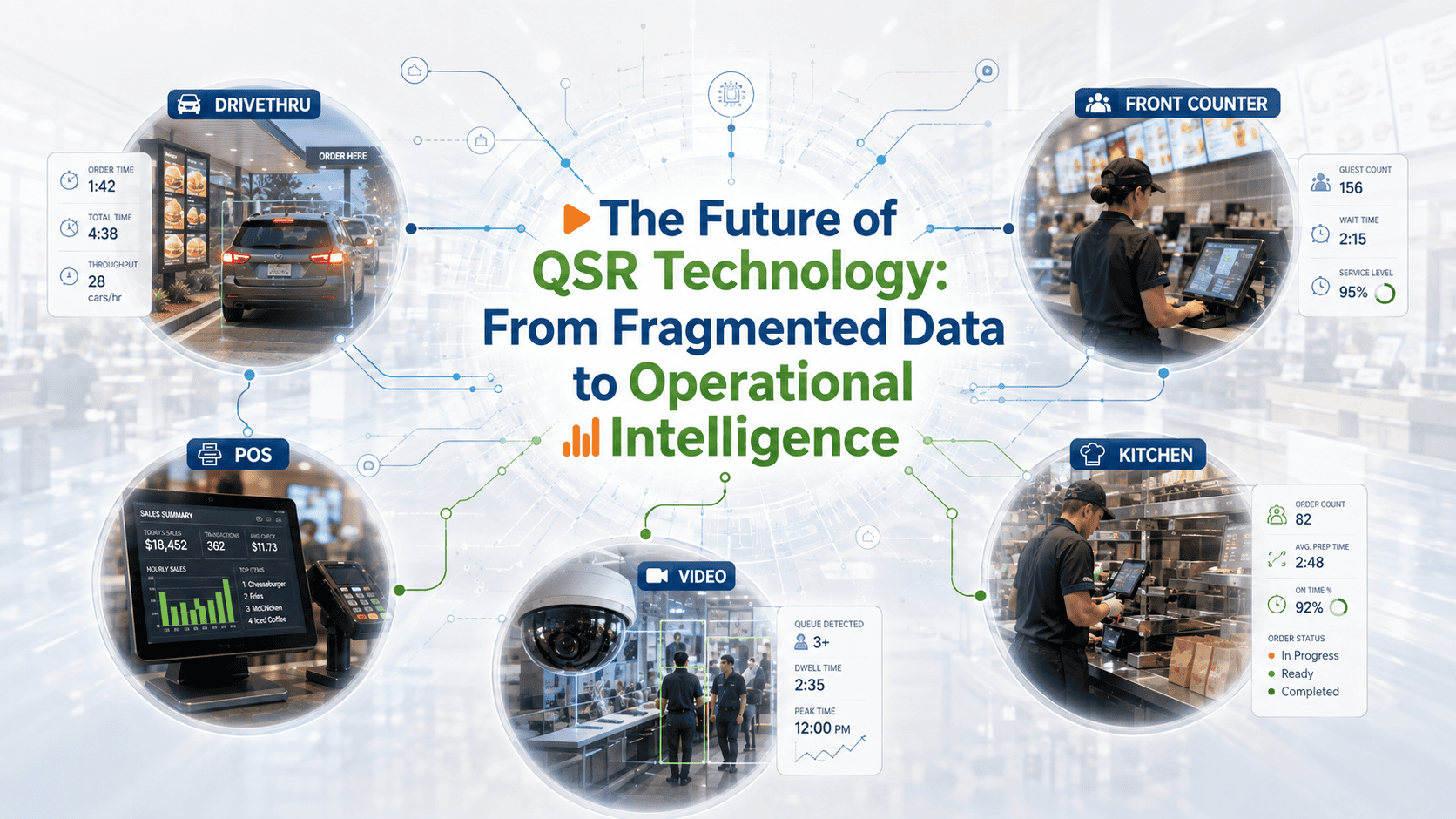
In the current QSR environment, no single technology provides a complete picture. A POS system can reveal transaction patterns, but not always the operational bottlenecks behind them. Drive-thru technology tracks the customer journey, but often provides limited visibility into what is happening inside the restaurant and the factors contributing to delays. Video provides valuable operational context, but without supporting data, it can be difficult to measure performance at scale.
Each signal is valuable, but when data is spread across multiple platforms and vendors, QSR operators must connect the dots by themselves. And, in my experience, this volume of information raises new questions: What matters most? What should be prioritized? Where should action be taken?
The next competitive advantage will come from connecting the data and technology operators already have, rather than adding more disconnected platforms. They shouldn’t have to piece together the guest journey themselves.
If one signal can tell you what happened, multiple connected signals can start to explain why. That’s where I believe restaurant operational intelligence becomes increasingly important.
What Is Restaurant Operational Intelligence?
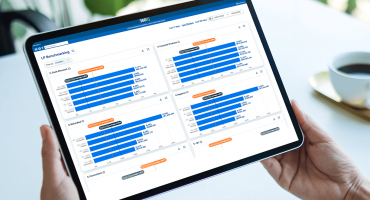
Restaurant operational intelligence connects signals from technologies such as POS, video analytics, drive-thru systems, labour and guest traffic into a single view, powered by AI and advanced analytics.
The goal is not simply to report what happened, but to provide understanding in the moment, helping operators see what’s happening, understand why and know where to act. The result is faster insights, smarter decisions, and better outcomes.
One platform. Multiple signals. One connected view. This is the next evolution.
When transaction data, the customer journey, operational activity and video are understood together, they create a single source of truth and a clearer view of what is happening across the restaurant. Instead of moving between individual systems and manually connecting the dots, operators can understand the complete operational story in one place.
As QSR brands scale across hundreds or thousands of locations, this becomes increasingly important. Leaders cannot be everywhere, and teams cannot be expected to manually connect data across multiple systems every day.
The next evolution of restaurant technology is not simply about adding more technology. It is about connecting the technology already in place creating a single source of truth that delivers faster insight, better decisions and stronger operational outcomes.
I believe we’re moving from fragmented data to connected data, to operational intelligence, and ultimately to AI-powered restaurant operations.
What excites me most is the opportunity ahead. I don’t believe the future of QSR is about having the most technology. It’s about having technology that works together.
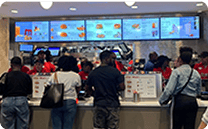
And this is one of the reasons I’m particularly excited about what we’re building at DTiQ. Our 360iQ platform brings together multiple sources of operational intelligence – including transactions, drive-thru and vehicle data, front-counter activity, video, and other operational signals – to create a more connected view of the restaurant and the customer journey.
The winners won’t necessarily have the biggest technology stack. They’ll have the most connected one.
And I genuinely believe DTiQ and the 360iQ platform play an important role in helping the industry make that shift.
Key Takeaways
- QSR technology investment continues to accelerate across POS, workforce management, digital ordering, self-service, and AI.
- Increasing technology adoption is creating greater complexity and fragmentation across restaurant operations.
- The next challenge is not collecting more data, but connecting the signals already being generated.
- Operational intelligence brings transactional, operational, and customer signals together to provide context and actionable insight.
- The next generation of QSR technology will move from fragmented data to connected data, to operational intelligence, and ultimately AI-powered operations.
- The most successful QSR brands will build connected technology environments, not simply larger technology stacks.